Showing posts with label Formula 1. Show all posts

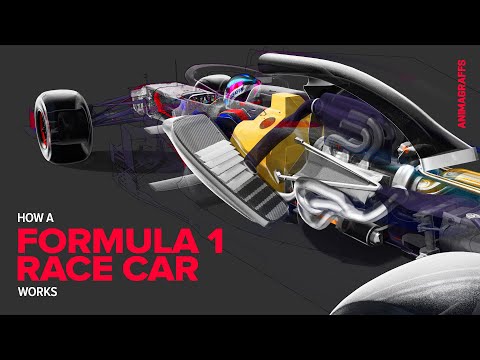
How a Formula 1 car works

A Formula 1 car is a pinnacle of automotive engineering, designed and optimized for high-speed performance on racing circuits. Here's a breakdown of how a Formula 1 car works:
 

1) Chassis: The chassis is the car's central structure, typically made from carbon fiber to ensure strength and lightness. It houses all the major components of the car and is designed to maximize aerodynamic efficiency while providing safety to the driver.
 

2 )Engine: Formula 1 cars are powered by highly sophisticated turbocharged V6 engines. These engines are incredibly powerful, producing around 900 horsepower in modern iterations. They are also hybrid systems, featuring Energy Recovery Systems (ERS) which recover energy from braking and heat to provide additional power.

 3) Aerodynamics: Aerodynamics play a crucial role in the performance of a Formula 1 car. Every aspect of the car's bodywork is designed to maximize downforce while minimizing drag. This includes intricate front and rear wings, diffusers, bargeboards, and various other aerodynamic elements. These components work together to create immense downforce, allowing the car to corner at high speeds.


After Race is before Race

@Red Bull Racing Honda and @Scuderia AlphaTauri F1 drivers take on a new off-road challenge in a race across Austria to the Red Bull Ring ahead of the Austrian Grand Prix 🇦🇹 Armed with huge Pinzgauer's they race through the mountains, but it's not just about being the fastest, we set them several tests along the way so they can learn more about Austria...


Pirelli's Formula One adventure II

After 33 days of testing (15 at official tests and 18 in private testing) Pirelli's Formula One adventure is finally about to get underway. The Formula One action starts this weekend in the same country where it ended for Pirelli exactly 19 years, four months and 24 days earlier, at the 1991 Australian Grand Prix in Adelaide - which was red-flagged after just 14 laps due to torrential rain and remains the shortest Formula One race to date.
This year, the race is being held in Melbourne's Albert Park for the 16th consecutive year, and marks race one of Pirelli's three-season agreement with the FIA, the governing body of world motorsport. But there is likely to be just as much drama in Melbourne as there was last time in Adelaide.
Pirelli's new PZero rubber is designed to help promote overtaking, both on the track and in the pits, while KERS makes a return and the moveable rear wing is also introduced. The hard and the soft compounds will be brought to Australia, with the soft tires providing plenty of speed and grip while the hard tires are more biased towards durability.

De la Rosa back to McLaren

Pedro de la Rosa has rejoined McLaren as the team’s official test and reserve driver. He displaces Gary Paffett to a test and development role that will see the Brit continue to be busy in the simulator. Although a return for de la Rosa was rumored some weeks ago in the Spanish media it seemed unlikely given than Paffett was well established in the third driver role, and that de la Rosa – who recently turned 40 – had an ongoing program with Pirelli.

Presumably the Pirelli job is now set to fade away given that the FIA has confirmed that the teams can conduct tyre development testing on Grands Prix weekends, and thus there is less need for its own program. At one stage Pirelli was even talking about running the Toyota test car on Grand Prix Fridays.

Featured Post

How a Formula 1 car works

A Formula 1 car is a pinnacle of automotive engineering, designed and optimized for high-speed performance on racing circuits. Here's a ...

Popular Posts